


There is an assumption quietly embedded in many learning systems: that thinking itself is not rewarding enough.
So we decorate it. We add confetti, streaks, points, trumpets; external signals meant to compensate for an activity presumed to be effortful, even dull. But anyone who has ever solved a difficult puzzle, untangled a stubborn bug, or felt a pattern suddenly click into place knows this assumption is false.
Thinking can be addictive.
There is a particular kind of cognitive satisfaction that comes from understanding, when confusion gives way to structure, when scattered pieces suddenly align. That moment does not need fireworks. The understanding is the reward. And yet, many digital learning environments behave as if it weren’t.
When Rewards Arrive Too Early
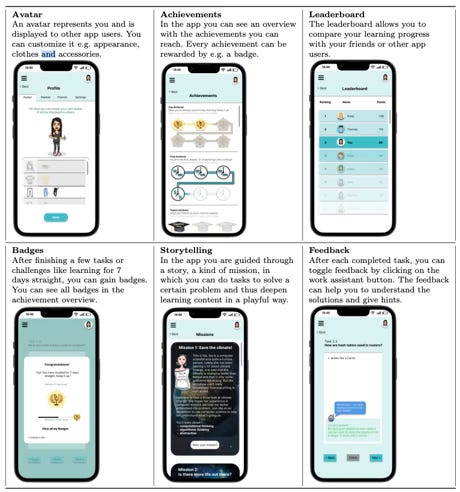
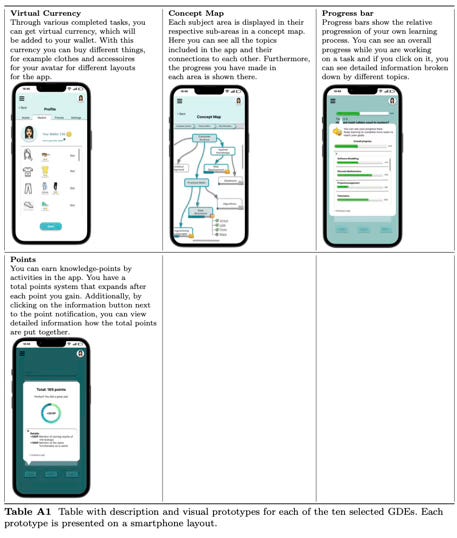
Our recent study on learner preferences in gamified learning environments makes this tension visible. Across 125 participants, learners consistently preferred game elements that made learning progress visible; not those that merely decorated the activity. Progress bars, feedback, concept maps, and meaningful achievements ranked highest. Avatars and virtual currency ranked lowest.
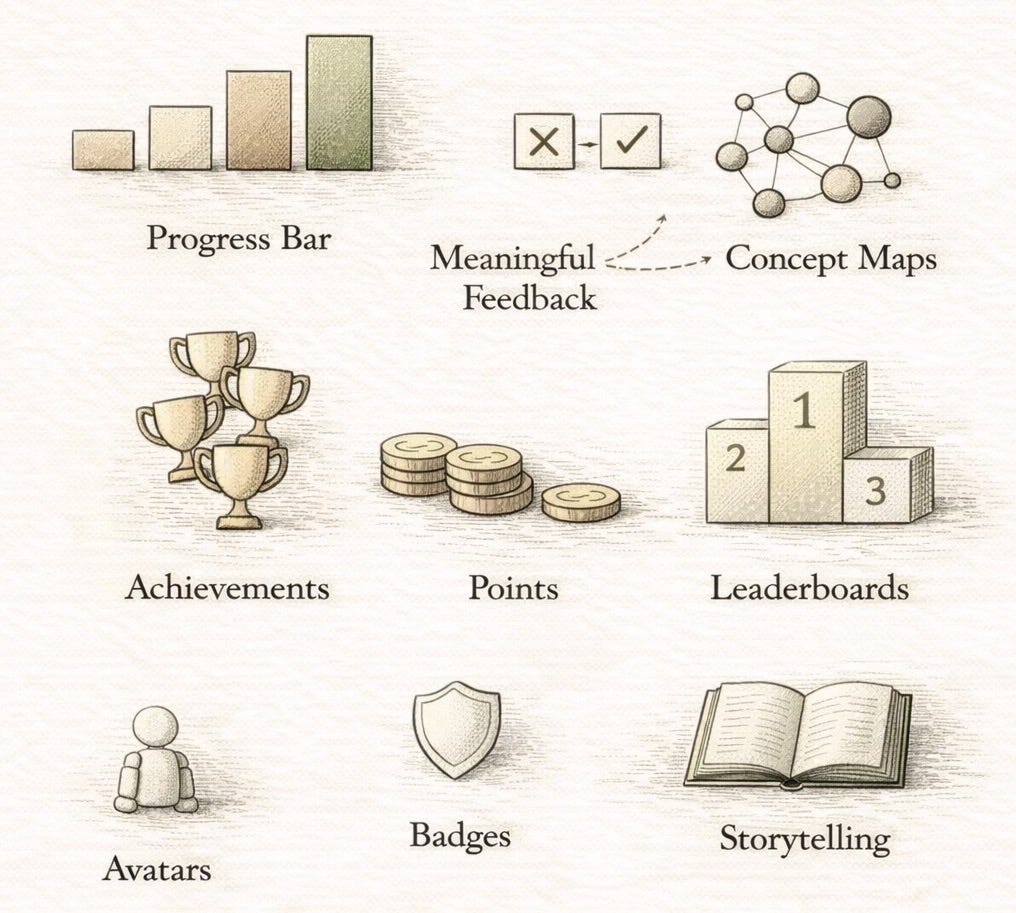
The pattern is striking. As one participant put it:
“There is something satisfying about seeing how far I’ve come and how much is left. It helps me organize my effort.”
Confetti, by contrast, arrives too early. Points redirect attention away from the work itself. Instead of asking “Do I understand this?” learners begin to ask “What do I get for this?” The centre of gravity shifts, from understanding to accumulation.
Older Learners Aren’t Less Motivated. They’re More Selective.
The data becomes even more interesting with age. Younger learners show slightly higher tolerance for points. But as age increases, preference shifts decisively toward elements that provide orientation: concept maps, feedback, progress indicators. Older learners are not chasing rewards; they are tracking trajectory. This is not a loss of motivation. It is a refinement of it.
As learners mature, motivation becomes less about stimulation and more about agency. Less about rewards handed out, more about judgment earned. They want learning environments that respect their capacity to evaluate progress for themselves.
Seen this way, the preference for progress indicators over prizes is not surprising. It reflects a deeper shift, from learning as performance to learning as navigation. From collecting tokens to building competence.
This reframes how we think about motivation itself. Motivation is often treated as a lever: pull it harder, and learning follows. But the evidence suggests something subtler. Motivation emerges when progress is legible, structure is visible, and effort leads to improvement rather than noise. Learners are not asking to be entertained. They are willing to feel that they learn and understand.
The most valued elements in the study were not easy. They demanded more: reflection, comparison, correction, judgment. Feedback exposes mistakes. Concept maps reveal gaps. Progress indicators make stagnation visible. These are cognitively demanding tools, and precisely for that reason, they motivate.
Confetti celebrates activity. Structure rewards understanding.
Where This Gets Dangerous
In a world shaped by AI, which can generate outputs effortlessly. If learners rely on AI before they have an internal structure, learning collapses into imitation. The system produces answers; the learner produces nothing of their own, no judgment, no sense-making, no ability to tell whether something is good, wrong, or meaningful.
What the study shows is that learners intuitively understand this risk. They gravitate toward learning environments that help them supervise their own progress. Tools that support orientation, structure, and feedback are exactly the tools required to supervise machines later on.
You cannot oversee what you do not understand. You cannot judge what you cannot place in context.
Why Interdisciplinary Learning Fits So Well
This also explains why interdisciplinary learning works and why it feels different. When learning starts with real questions rather than isolated techniques, structure emerges naturally. Learners must connect ideas, navigate uncertainty, and decide what matters. Progress is not measured by points collected, but by insight gained.
Interdisciplinary learning does what the most effective gamification elements do: it makes thinking necessary, visible and satisfying. It creates friction, not to slow students down, but to give learning weight.
Seen this way, the popularity of progress bars and concept maps is no accident. They mirror what good interdisciplinary problems already provide: a sense of movement, connection, and purpose.
The Hard Conclusion
Here is the uncomfortable implication. Much of what we call “gamification” fails not because it is badly designed, but because it is conceptually misaligned. It replaces orientation with stimulation. It confuses activity with progress. It treats motivation as something to inject rather than something to cultivate.
Learners are telling us, very clearly, that this is appreciated if they learn for entertainment and pleasure, but it does not work if they seek real, deep understanding and cognitive satisfaction. They do not want confetti.
And in an AI-saturated world, the cost of ignoring this is no longer just boredom. It is the quiet erosion of judgment. Systems that train learners to chase signals instead of form understanding do not merely fail to educate. They produce people fluent in output and poor in agency.
The question, then, is not only how to motivate learners. It is whether we are willing to trust that thinking, real thinking, is demanding enough, rewarding enough, and powerful enough to stand on its own. And whether we are brave enough to design learning environments that treat it that way.
For readers interested in the research behind these observations: Gamification with Purpose: What Learners Prefer to Motivate Their Learning