


At first glance, very little. And that reflex, the sense that these worlds do not belong together, already hints at one of the quiet problems in how we teach computing.
For a long time, computer science has been treated as a self-contained territory. A place of abstract logic and formal syntax, of clean problems and cleaner solutions. For students who already feel at home in technical spaces, this framing can feel natural, even reassuring. For many others, it feels like standing in front of a closed door, uncertain whether they are meant to knock, or whether the room inside was designed with them in mind at all.
The usual response is familiar. Start earlier. Simplify the material. Use visual programming. Go unplugged. Add more exercises. Push a little harder.
But what if the difficulty is not when we introduce coding, or even how early, but how narrowly?
Fun matters, of course. But fun is not the mechanism. What truly moves students is curiosity with direction: the feeling that something real is at stake, and that computing is one (often non-negotiable) way, among others, to act on it.
Learning Begins With Wonder
Imagine you are thirteen and someone says, “Today we’re learning to code.” You might brace yourself. Now imagine they say instead, “Let’s try to understand why bees are disappearing and whether we can use data to help us make sense of it.” Suddenly, coding is no longer the destination. It is a means. That shift, small as it seems, changes everything.
Over time, we discovered something quietly transformative. Interdisciplinary learning does not merely make computer science more accessible. It creates entirely different paths into the field, paths many students would never encounter if coding were presented as the starting point rather than the tool. Perhaps most strikingly, the students who began by saying they wanted nothing to do with coding were often the ones who profited the most by experiencing the broad nature of computing.
Interdisciplinary learning reverses the usual order of instruction. Instead of asking students to care about a tool before they know why it matters, it begins with questions that already hold meaning, and introduces computing as a way to explore them.
Motivation comes first. Abstraction follows. This is not about making computer science easier. It is about making it legible.
From Subjects to Expeditions
We designed what we call RockStartIT expeditions: short, immersive learning experiences in which students explore real-world questions using computational tools. Not here is loop in JAVA, now apply it someday. But here is a problem: what tools might help us think about it?
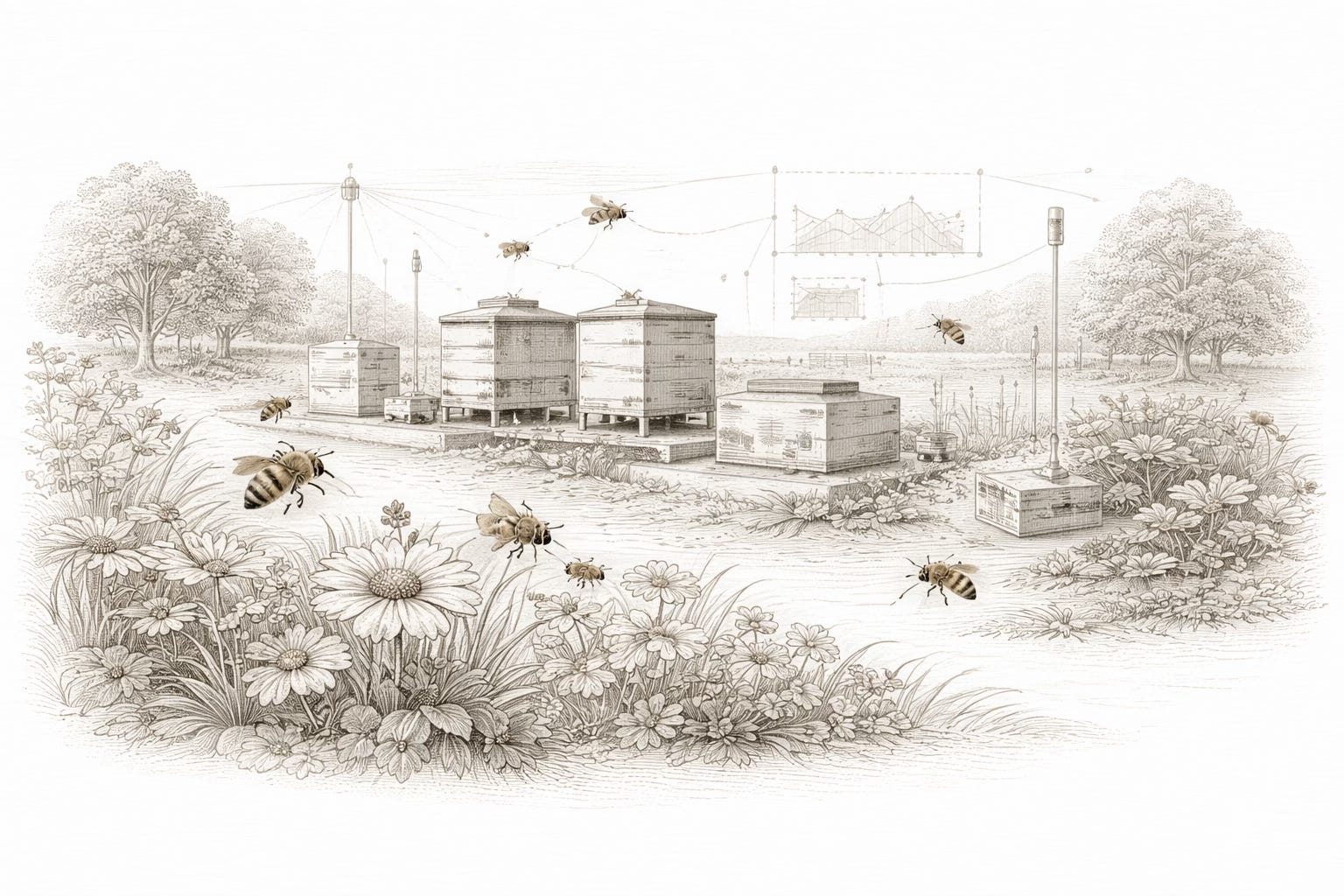
In Save the Bees, students move between biology, data analysis, and artificial intelligence, learning about bee health while building websites, analysing population data with SQL, and training simple image-recognition models. No prior coding experience is required.
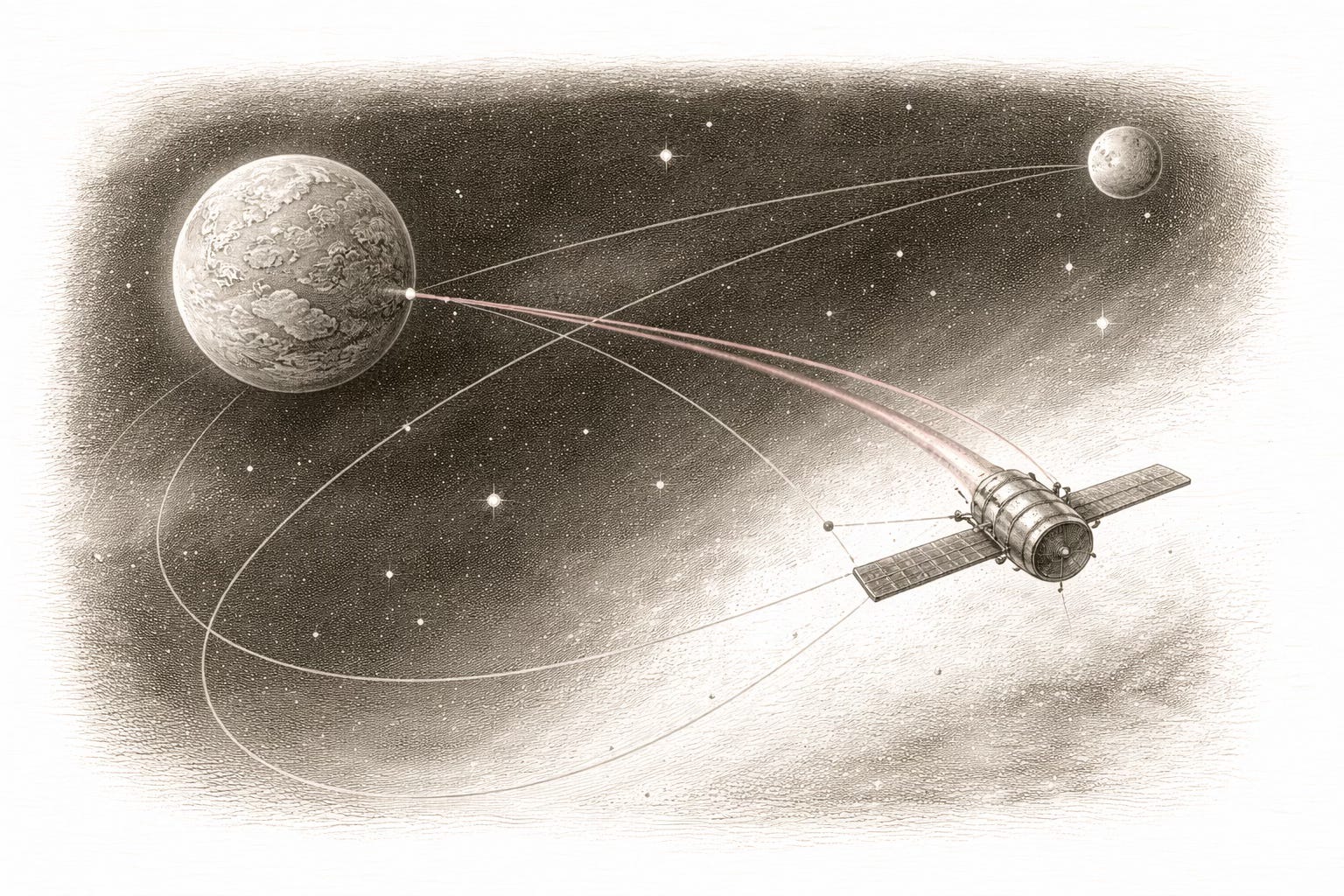
In Search of Other Life, students become space explorers. They decode camera signals, program rocket trajectories, and transmit images across distances. Other expeditions involve sorting vegetables with algorithms or modelling climate change through code.
Every step invites exploration. You do not need to know what a for-loop is to begin. You need curiosity.
When Learning Feels Human
When coding is woven into biology, climate science, or space exploration, students are no longer asked to audition for a pre-existing identity. They can arrive as themselves and allow computing to meet them where they are.
What we see, again and again, is not just enjoyment, but a shift in how students see themselves. Those who once described themselves as “not techy” begin to act like people who use technology to think. Coding becomes less intimidating when it clearly serves a purpose beyond itself. Confidence grows not because the material is diluted, but because its relevance is unmistakable.
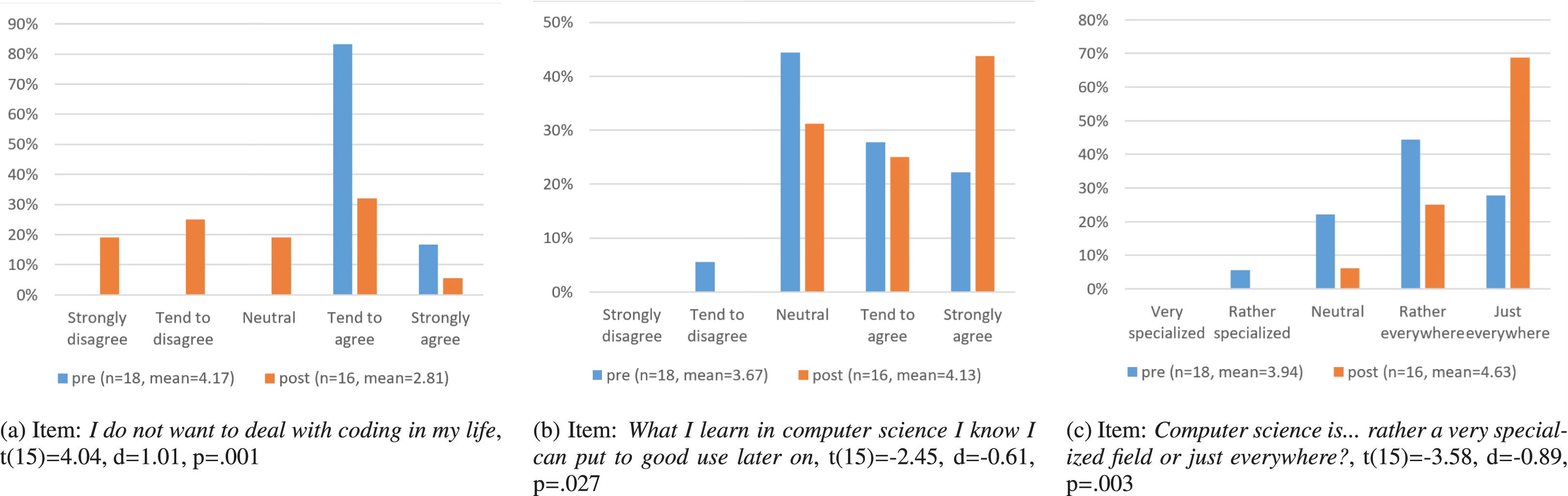
This aligns with what our research has shown more broadly: interest and confidence develop most reliably when learners can connect new skills to questions they already care about. Abstraction alone rarely ignites motivation. Meaning does.
We initially designed these experiences with girls in mind, given how often computer science classrooms fail to make them feel welcome. But the effect reaches much further. Interdisciplinary, problem-based learning supports anyone who has ever felt uncertain, underprepared, or out of place in a technical environment.
When classrooms allow for different starting points, something subtle shifts. Engagement deepens. Stereotypes loosen their hold. Curiosity begins to travel.
Not Less Computer Science, But More of It
There is a common worry that interdisciplinarity dilutes the discipline. Our experience suggests the opposite. When coding is embedded in meaningful contexts, students are willing to wrestle with harder ideas. They tolerate ambiguity. They persist longer. The discipline does not disappear; it gains depth.
What changes is the entry point. Instead of asking students to prove they belong before they can apply computing, we let the application be the reason they begin. This perspective also connects to something we explored in an earlier Thinkable Letters essay: the idea that interest in computer science does not simply fade with age, but reorganises. As students grow older, curiosity becomes more selective, confidence more fragile, and relevance more decisive. Interdisciplinary learning meets this shift with care. By anchoring coding in questions that already matter, it honours learners’ developmental need for meaning and agency, rather than mistaking hesitation for disengagement.
Why This Matters Now
If we want more young people to engage with computer science, especially those who do not already see themselves reflected in it, the answer is unlikely to be more of the same, but earlier. We need to reconsider what counts as a legitimate beginning.
Interdisciplinary learning does not replace computer science. It reframes it as a way of understanding the world, not just a subject to master. And when students encounter coding in this way, something clicks. Not because it is flashy or simplified, but because it feels human.
When coding helps explain why bees are dying, how climates shift, or what signals travel through space, it stops being a gatekeeper. It becomes a way of thinking.
And that, far more than any syntax, is the real superpower.
Computer science has quietly become a foundational discipline. Not in the sense of replacing others, but in the way mathematics once did: as an extension of thought itself. It sits beneath almost every human endeavour now, supporting, shaping, and amplifying what we are able to imagine and execute. Science, art, medicine, archaeology, linguistics, music; each is increasingly carried forward by some strand of computation, whether we name it or not.
Not having access to these skills is no longer a neutral gap. It is a constraint on agency. It means having ideas you cannot test, observations you cannot explore, systems you cannot build, and questions you cannot follow all the way through. Creativity without the ability to execute becomes fragile. Vision without tools turns into regret, not because the ideas weren’t good, but because the world now moves through channels you cannot enter.
This will only intensify with AI. Those who can shape, adapt, and direct these systems will not just use technology; they will quietly build the world the rest of us have to live in. Others will still have ideas, often brilliant ones, but fewer ways to act on them. The gap will not be about intelligence or imagination. It will be about leverage.
What’s striking is how universal this leverage is. An archaeologist can use image recognition to reconstruct fragments of the past. A linguist can use AI to fill gaps in damaged or destroyed texts. A biologist can trace invisible patterns across ecosystems. A musician can explore structures no human hand could calculate alone. These are not “technical applications” in the narrow sense. They are extensions of curiosity.
Computer science, in this light, is not a career choice. It is a literacy. A way of turning wonder into action. And without it, even the most beautiful ideas risk remaining exactly that, beautiful, unrealised, and quietly lost to time.
For readers interested in the research behind these observations: Authentic interdisciplinary online courses for alternative pathways into computer science, Journal of Systems and Software, 2024.