


The quality of our decisions depends on the quality of our thinking. And the quality of our thinking depends on the thinking methods we use.
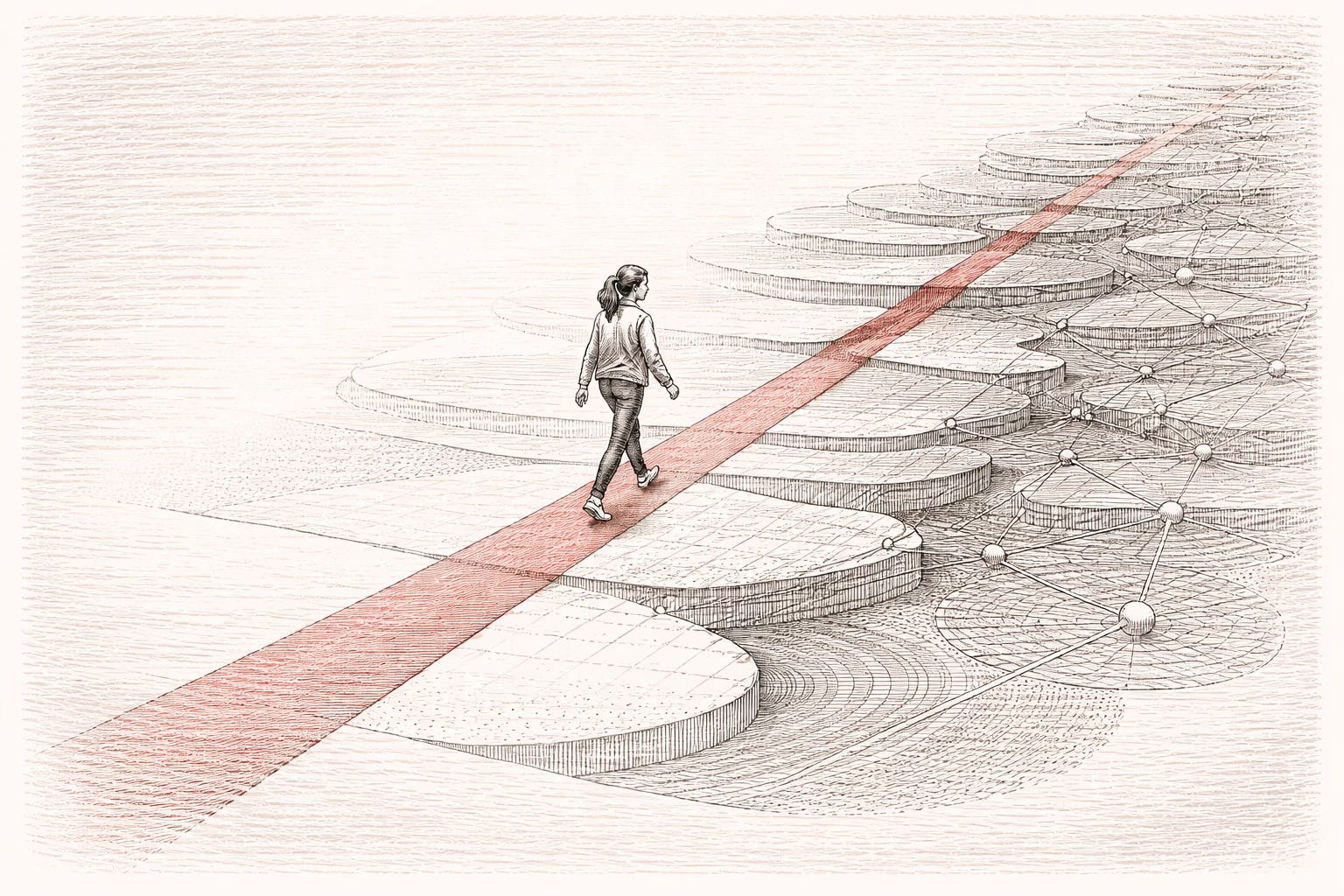
Most of us are never explicitly taught how to think. Instead, we are taught what to know. We learn facts, formulas, and procedures, and we practice applying them to well-defined problems with clear boundaries and expected answers. This works well for building foundational knowledge. But it leaves an important gap.
A few years ago, I started noticing something that kept bothering me. Children do well in school. They learn quickly. They solve exercises, pass tests, and follow instructions. And yet, when problems become less clear, when there is no single correct answer, when different considerations pull in different directions, many of them suddenly feel lost. Not because they are incapable. But because no one ever taught them how to use their smart brains effectively and think structurally in such situations.
For a long time, this doesn’t show. School is carefully structured. Learning happens in small steps. Subjects are separated. Problems are simplified. Uncertainty is reduced as much as possible. Progress is measurable, feedback is immediate, and success is clearly defined. In this environment, children can perform very well without ever needing explicit thinking strategies.
This works surprisingly well. Until it doesn’t.
Real life does not stay small and well-structured. At some point, problems become complex, open-ended, and interdisciplinary. They cross subject boundaries. They involve uncertainty, trade-offs, and consequences that unfold over time. Suddenly, knowing the right formula or recalling the right fact is no longer enough. What matters is whether you can make sense of the situation as a whole.
This is where many learners struggle. Not because they lack intelligence or motivation, but because they lack tools for thinking.
Thinking methods, often called mental models, only reveal their true value when problems are complex enough to overwhelm intuition. They help us slow down, structure our reasoning, and look at the same situation from more than one perspective. When we change how we look at a problem, hidden assumptions become visible. Options appear that were invisible before.
In life and in business, the people who make better decisions are often not the ones who know the most. They are the ones with fewer blind spots. They see more of the problem and therefore make fewer costly mistakes. This is why thinking methods matter.
Thinkable grew out of a deep enthusiasm for this kind of thinking, and for the particular cognitive satisfaction that comes with real understanding. That moment when confusion turns into structure. When complexity becomes navigable. When something suddenly clicks.
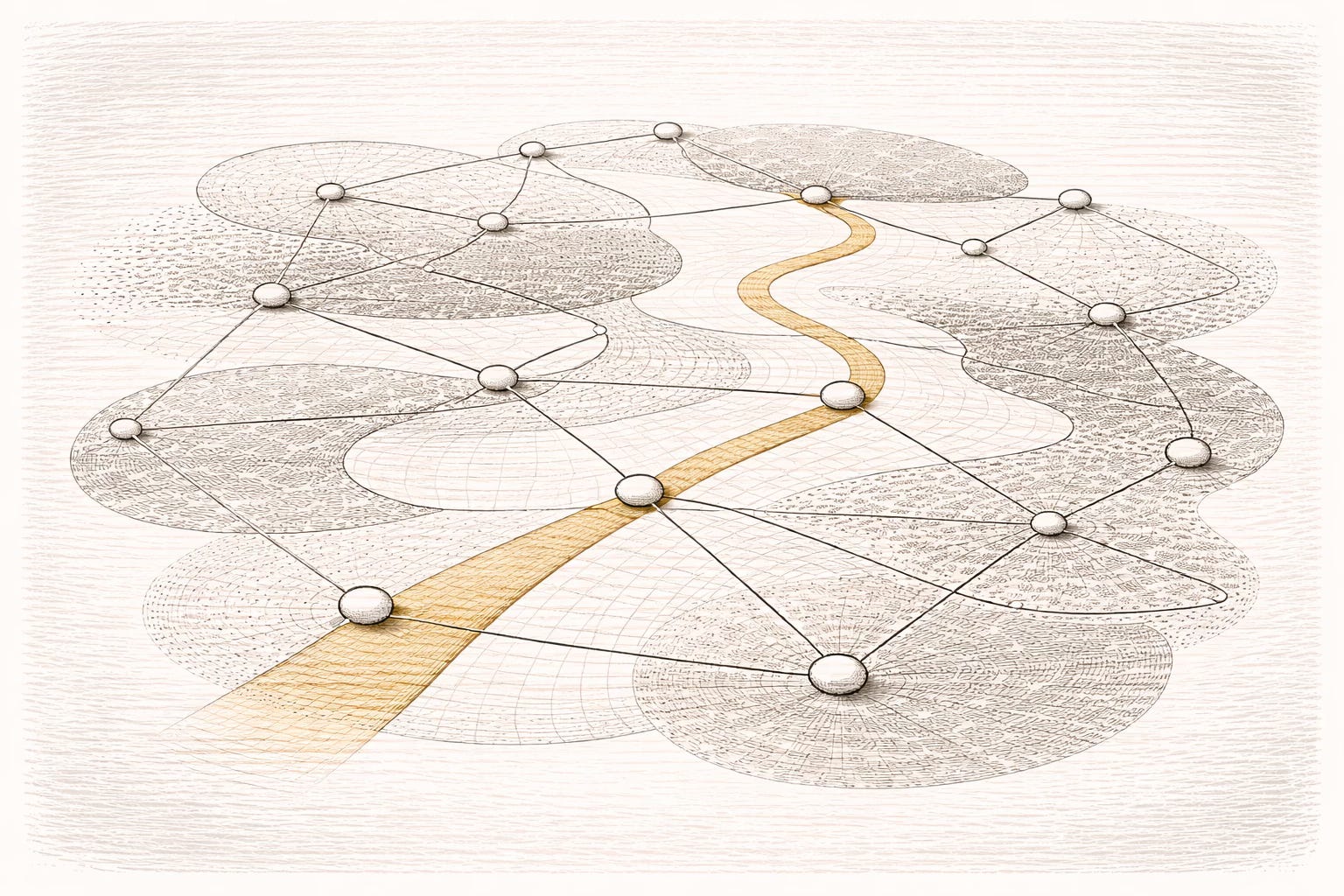
This experience is powerful. It builds confidence, curiosity, and a sense of intellectual independence. And I believe children should experience it early, not only later in advanced education or professional life.
Thinking better does not mean thinking harder, and it does not mean filling children with more information. It means giving them simple, reliable processes that help guide their thinking across different dimensions of a problem and from multiple perspectives. Different problems require different approaches. Learning to recognise which thinking process fits a situation, and how to use it, is a foundational life skill. Over time, this becomes what we often call wisdom. Not knowing everything, but using what you know well.
At Thinkable, the focus is not on expanding how much information learners can access. Schools already do that. The focus is on expanding the range of thinking processes they can draw on. We work with real, interdisciplinary problems and meet children in domains they already care about, using curiosity as the starting point.
When children experience that better thinking leads to better understanding, motivation follows naturally.
Thinkable exists to make this kind of interconnected experience accessible. Especially in a world where information is abundant and answers are easy to generate, the ability to think clearly, reason carefully, and decide responsibly becomes one of the most important skills we can help the next generation develop.
In our Thinkable Letters, we share new courses and notify you as they emerge, reflect on research insights about thinking and learning, and regularly offer small thinking challenges you can explore together with your children, simple prompts designed to spark curiosity, conversation, and deeper understanding.
If you want learning to prepare your child not just to answer questions, but to ask better ones, you’re very welcome here.
—
Learning that strengthens thinking, judgment, and intellectual independence